
Weaver Lab - Homepage


Principal Investigators

Valerie M. Weaver, PhD
Professor of Surgery
Division of Surgical Oncology
Director, Center for Bioengineering & Tissue Regeneration
Valerie M. Weaver Lab
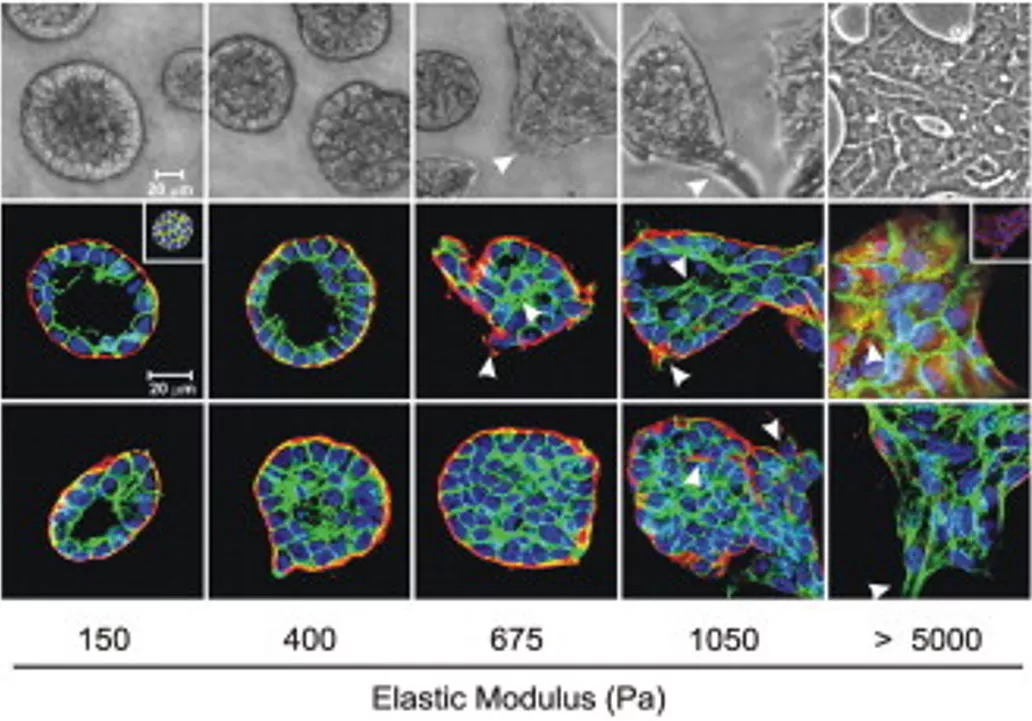
Stromal-epithelial interactions regulate tissue development and homeostasis. In particular, the extracellular matrix, which is the noncellular component of the microenvironment, influences cell growth, survival, migration and tissue-specific differentiation through a repertoire of cellular receptors including integrins, syndecans and discoidin receptors. My group is exploring the molecular mechanisms whereby these extracellular matrix receptors modulate cell fate. Specifically, we are investigating how mechanical and topological properties of the matrix, which are related to its composition and organization, regulate the function of matrix receptors to alter cell behavior. Our research program is broadly divided into two fields of inquiry. The first focuses on understanding how matrix composition and organization influences mammary tissue development and tumor progression, and the second aims to clarify the role of matrix force on embryonic and adult stem cell fate.
Publications
- The microenvironment dictates glyco-immune surveillance via HSF1-mediated metabolism.
2026 | PubMed
- Tissue tension permits β-catenin phosphorylation to drive mesoderm specification in human embryonic stem cells.
2026 |PubMed
- Inactivation of CDKN2AARF Promotes p53-Independent Remodeling of the PDAC Tumor Microenvironment.
2026 |PubMed
- Generation of Polyacrylamide and Silicone Extracellular Matrix Substrates with Defined Stiffness for Cell Biology Applications.
2026 |PubMed
- NCOR2 represses MHC class I molecule expression to drive metastatic progression of breast cancer.
2026 |PubMed
Our Research